Escaping a Costly Timeshare Scam
July 28, 2026
While visiting New York, “Gerard” – a disabled 72-year-old living with HIV – booked a hotel that offered a discounted rate if he attended a Wyndham Rewards presentation. Though he was promised that the presentation would not be longer than two hours, it ended up being over seven hours. During the session, Gerard faced several hours of high-pressure sales tactics, often from two sales representatives simultaneously. Further, attendees were not allowed any breaks and no food was provided. Gerard left the presentation with a Wyndham credit card and a “Club Wyndham” membership with a balance of $15,195.
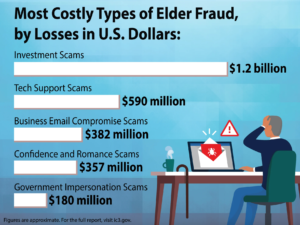
FBI data show that older adults are disproportionately affected by fraud and financial scams. Source: Federal Bureau of Investigation, Elder Fraud, in Focus (2024).
Gerard – who has no income other than $1,300 per month in Social Security benefits – was incredibly stressed by this situation. He tried to cancel the membership, but the email address they provided was inactive and the email bounced back. He tried several times to reach representatives but was never able to connect with someone to cancel and was getting billing statements for the outstanding balance.
Staff Attorney Delaney Nevius sent a letter to the Wyndham recission department, arguing that Gerard had made a good faith effort to cancel the contract within the lawful window and highlighting their coercive sales tactics. After Delaney followed up several times to dispute the contract, Wyndham Vacation Rentals finally cancelled the contract and refunded Gerard for the payments he had made.
“Thanks to you and ALRP, I was redeemed and now have somewhat less stress in my latter years.” – Gerard, ALRP Client
Last year, 40% of ALRP’s clients were over age 60. As the population of older adults served by ALRP grows, we are increasingly seeing them targeted for financial exploitation through scams ranging from Social Security and Medi-Cal impersonations to the type of high-pressure tactics Gerard experienced. Last year, the U.S. Senate Special Committee on Aging reported that seniors over age 60 were disproportionately targeted and lost a staggering $4.8 billion to scams, which are becoming more widespread and more sophisticated.
Our client services team intervenes early when possible, reviewing payment notices that our clients have received and identifying whether they’re fraudulent. Other times, we advocate for clients like Gerard—helping them assert their rights against the bad actors that have violated them.